Source Powder Coated Privacy Slats for Garden, Pool, and Yard
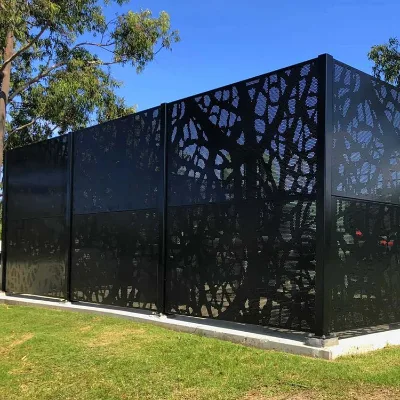
Compare 30 aluminum and steel fence options featuring Powder Coated Privacy Slats designed for gardens, pools, and yards. Buyers can review custom dimensions, finishes, and mounting styles to find the right rigid barrier solution.
Key considerations
Products List


Decorative Powder Coated DIY Slats Privacy Metal Aluminum Wall Fence Panels
$50.00 - $120.00
MOQ: 10 Square Meters

Vertical Strip Privacy Garden Fence Panels Aluminum Privacy Slats
$45.00 - $50.00
MOQ: 100 Square Meters


Factory Price Aluminum Privacy Slat Fence Panels Powder Coated for Houses
$20.00 - $30.00
MOQ: 1 piece


PVC Screen Fence Strip Roll Garden Privacy Plastic Chemical 19cm*35m Green
$7.99 - $9.99
MOQ: 2000 Pieces


Comprehensive Sourcing Guide
Strategic Sourcing Guide for Powder Coated Privacy Slats
The global demand for high-performance perimeter security and aesthetic landscaping solutions has elevated the profile of aluminum slat fencing systems. Among the various configurations available, Powder Coated Privacy Slats represent a convergence of durability, visual appeal, and functional security. For procurement professionals, navigating the market for these specific components requires a disciplined approach to technical verification, compliance auditing, and supplier capability assessment. This guide outlines the critical factors buyers must evaluate when sourcing Powder Coated Privacy Slats, ensuring that the final procurement aligns with project specifications and long-term operational goals.
Technical Specifications and Material Composition
The foundation of a successful procurement strategy lies in a precise understanding of the material and dimensional specifications. The core material for modern privacy slats is predominantly aluminum, chosen for its inherent resistance to corrosion and structural stability in outdoor environments. Unlike steel alternatives, aluminum does not rust, making it particularly suitable for coastal regions or areas with high humidity. The supply chain data indicates that the material is consistently treated with a powder-coated finish, which serves as a primary barrier against environmental degradation.
Dimensional flexibility is a defining characteristic of this product category. Buyers should verify that the slat bar dimensions are customizable to project needs. Standard profiles observed in the market include widths such as 65mm, 80mm, 100mm, and 150mm, all typically paired with a thickness of 16mm. However, the "Per Request" designation is critical; suppliers must demonstrate the capability to deviate from these standard metrics without compromising structural integrity. The height of the fence panels and the spacing between slats are equally variable. While standard spacing might be 10mm to ensure privacy, the ability to customize this distance is essential for balancing airflow, visibility, and security requirements.
The structural components, including upright posts, must also be scrutinized. Posts are available in various configurations, such as inground or flanged options, with heights ranging from 1800mm to 2400mm. The connection mechanisms, such as concealed fixing U-channels and snap-on fixing covers, play a vital role in the installation process. These components often utilize self-tapping screws of specific dimensions, such as 10-16mm, to ensure a secure and flush finish. Buyers must confirm that the system supports both pre-assembled and DIY installation methods, as this impacts labor costs and project timelines significantly.
Compliance and Certification Verification
In the B2B procurement landscape, compliance is not merely a formality but a risk mitigation strategy. When sourcing aluminum slat fencing, buyers must rigorously verify the certifications held by potential suppliers. The supply data highlights specific certifications including CE, RoHS, and ISOASTM. These certifications indicate that the products meet specific safety, environmental, and quality standards required in various international markets.
The CE marking suggests conformity with health, safety, and environmental protection standards for products sold within the European Economic Area. RoHS compliance ensures that the materials used do not contain restricted hazardous substances, which is increasingly important for sustainable construction projects. The ISOASTM reference points to adherence to specific material and testing standards, though the exact standard number should be confirmed with the supplier. It is important to note that while some background information may suggest ISO 9001, buyers should not assume this certification is present without explicit documentation from the manufacturer.
Furthermore, the surface treatment process must be verified. The "Powder Coated" finish is a standard attribute, but the specific coating technology and the resulting film thickness are often not detailed in general product listings. Buyers should request technical data sheets that specify the powder coating type (e.g., polyester, epoxy) and the curing process. This verification ensures that the finish will withstand UV exposure, rain, and temperature fluctuations without chipping or fading. The color options, typically black, white, or grey, should be confirmed against the supplier's RAL color chart to ensure exact matching with architectural designs.
Cost Drivers and Pricing Dynamics
Understanding the cost structure of Powder Coated Privacy Slats is essential for budget management. The observed price range for these products spans from $0.99 to $218 USD, a wide variance that reflects differences in material thickness, finish quality, customization levels, and order volume. The Minimum Order Quantity (MOQ) also varies significantly, ranging from 1 unit to 2000 units. This variability suggests that buyers can source small quantities for pilot projects or large batches for commercial developments, but the unit price will likely decrease as the order volume increases.
Several factors drive the final cost. First, the customization of dimensions, such as non-standard slat widths or unique post heights, adds to the manufacturing complexity and cost. Second, the choice of color and finish can impact pricing; custom colors often require separate production runs compared to standard stock colors like black or white. Third, the packaging requirements, typically described as a "Standard Export Package," must be evaluated. If the project requires specialized packaging to prevent damage during long-distance shipping from the origin point in Shandong, China, additional costs may apply.
Buyers should also consider the logistics costs associated with the loading port, which is identified as Qingdao, China. Shipping costs will fluctuate based on global freight rates, container availability, and the total weight of the aluminum components. While the base product price is a significant component, the total landed cost must include freight, insurance, and import duties. It is advisable to request a detailed breakdown of costs that separates the product price from logistics and handling fees to ensure accurate budget forecasting.
Typical Applications and Design Flexibility
The versatility of Powder Coated Privacy Slats makes them suitable for a wide array of applications. The primary use cases identified include residential gardens, swimming pool enclosures, commercial yards, and public parks. The "Rigid Barrier" designation indicates that these systems are designed to provide a high level of security and privacy, making them ideal for properties where visual screening is a priority.
In residential settings, the modern aesthetic of flat or louver-style slats complements contemporary architecture. The ability to choose between flat and louver styles allows designers to control the degree of light penetration and airflow while maintaining privacy. For pool applications, the aluminum material is particularly advantageous due to its resistance to chlorine and water damage. The "Garden Yard" and "Park" applications highlight the system's adaptability to public spaces, where durability and low maintenance are critical.
The design flexibility extends to the integration of the fencing with other landscape elements. The "Pre-Assembled" or "DIY" options allow for different installation strategies depending on the site conditions and labor availability. In commercial or institutional settings like schools, the system's ability to be customized in height and color ensures it can meet specific security and aesthetic guidelines. Buyers should evaluate how the slat spacing and post configuration align with the specific security requirements of the intended application, ensuring that the chosen configuration provides the necessary barrier without compromising the visual appeal of the site.
Supplier Evaluation and Quality Control
Selecting the right supplier is a critical step in the procurement process. Buyers should prioritize suppliers who demonstrate transparency in their manufacturing processes and quality control measures. The origin of the products is identified as Shandong, China, a region known for its metalworking industry. However, the specific capabilities of the supplier should be verified through site audits or detailed questionnaires.
Key evaluation criteria include the supplier's ability to meet the "Per Request" standards for width, height, and slat dimensions. The supplier must demonstrate a robust quality control system that ensures consistency in the powder coating application and the structural integrity of the aluminum components. Buyers should request samples to verify the finish quality, color accuracy, and the strength of the connection mechanisms, such as the concealed fixing U-channels and snap covers.
Additionally, the supplier's capacity to handle large orders and meet lead times is essential. While specific lead times are not provided in the general data, buyers should establish clear expectations regarding production and shipping schedules. The supplier's experience with international logistics, particularly from the Qingdao loading port, is also a factor to consider. A supplier with a proven track record of exporting to the buyer's region will likely have more efficient processes for handling customs documentation and freight coordination.
Long-Term Procurement Considerations
Sourcing Powder Coated Privacy Slats is not just a one-time transaction but an investment in long-term infrastructure. Buyers should consider the lifecycle costs of the product, including maintenance requirements and potential replacement needs. The powder-coated finish is designed to be low maintenance, but the longevity of the coating depends on the quality of the application and the environmental conditions of the installation site.
Buyers should also plan for future scalability. If the project involves expanding the perimeter or adding new sections, it is crucial to ensure that the supplier can provide matching components in the future. This includes maintaining the same color, finish, and dimensional specifications. The availability of spare parts, such as screws and fixing covers, should be confirmed to facilitate easy repairs or modifications.
Finally, buyers should stay informed about evolving industry standards and regulations. As environmental and safety standards become more stringent, suppliers may need to update their certifications and manufacturing processes. Maintaining a relationship with a supplier who is committed to continuous improvement and compliance will ensure that the procurement remains aligned with best practices and regulatory requirements over the long term. By focusing on these strategic considerations, buyers can secure a reliable supply of high-quality Powder Coated Privacy Slats that meet their immediate and future needs.
FAQs
What certifications do the aluminum slat fences hold?
The products hold CE, RoHS, and ISOASTM certifications. These verify compliance with safety and environmental standards for international markets, ensuring the materials do not contain restricted hazardous substances.
Can the slat dimensions be customized for specific projects?
Yes, customization is available for slat bars, widths, and heights. Standard sizes include 65x16mm or 100x16mm, but buyers can request specific metrics to match unique architectural or security requirements.
What surface finish options are available for the fencing?
The fencing features a powder-coated finish available in black, white, or grey. Buyers can also request custom colors to align with specific design schemes while ensuring durability against weather conditions.
How is the aluminum fence installed on site?
Installation supports both pre-assembled and DIY methods using concealed fixing channels. The system includes snap-on fixing covers and self-tapping screws for a secure, flush finish on inground or flanged posts.
What is the minimum order quantity for these slat fences?
The minimum order quantity ranges from 1 to 2000 units depending on the supplier. This flexibility allows buyers to source small pilot batches or large commercial orders without excessive initial investment.
Where are these aluminum slat fences manufactured and shipped from?
Products originate from Shandong, China, and are loaded from the Qingdao port. This location is a known hub for metalworking, ensuring efficient export logistics for international buyers seeking these specific fencing solutions.